

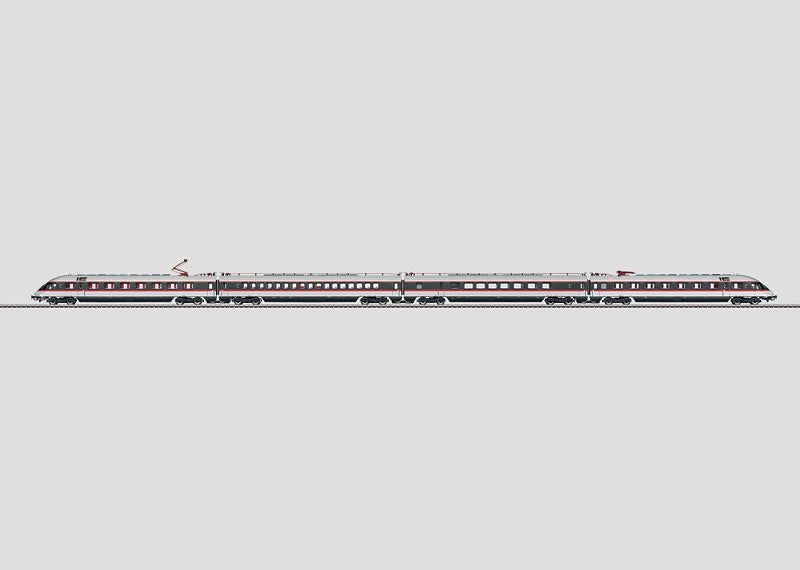
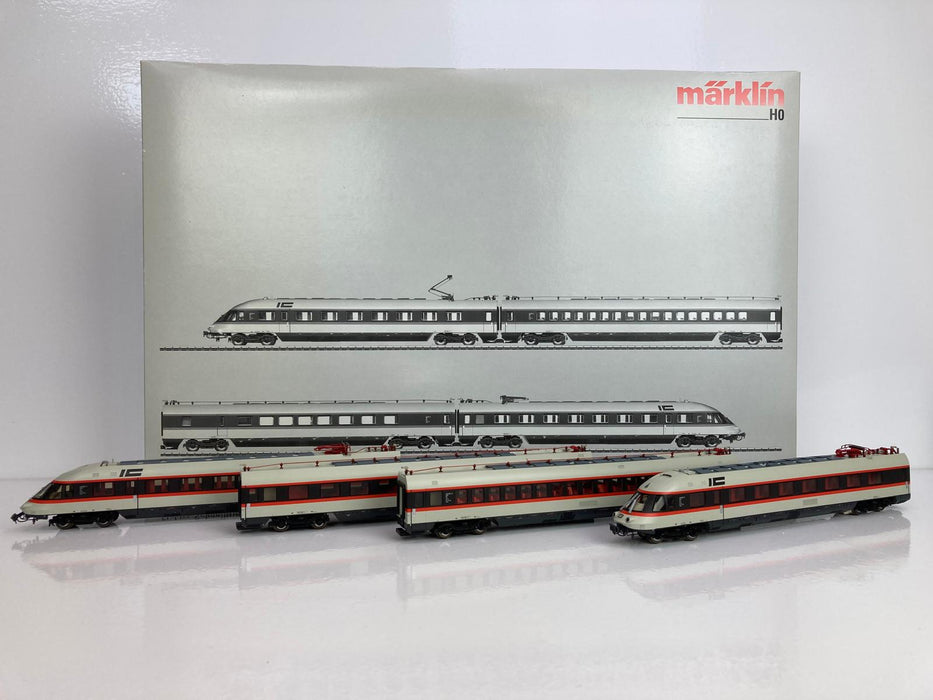
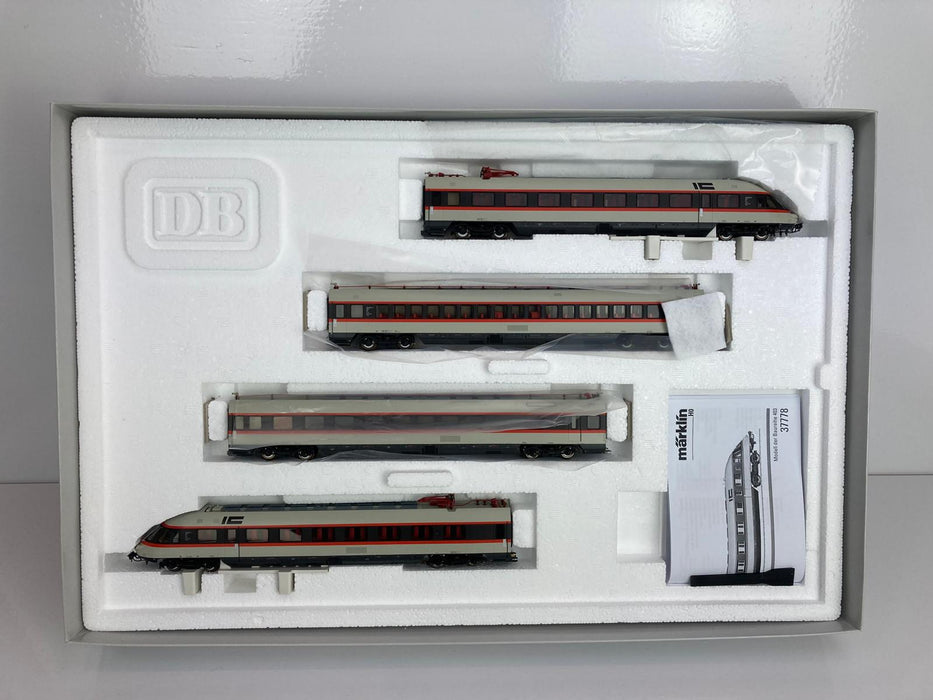
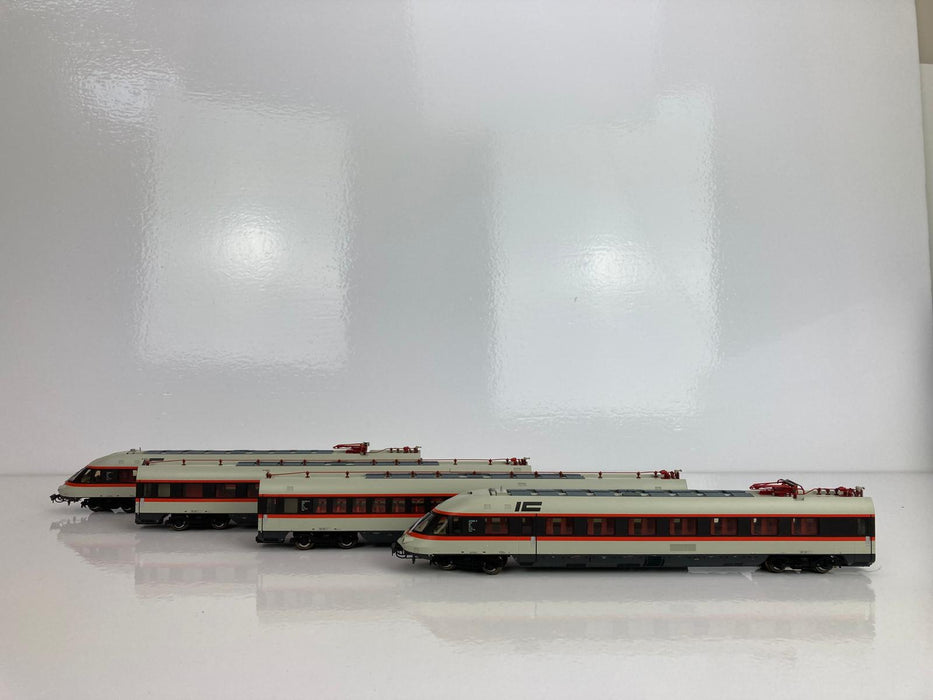
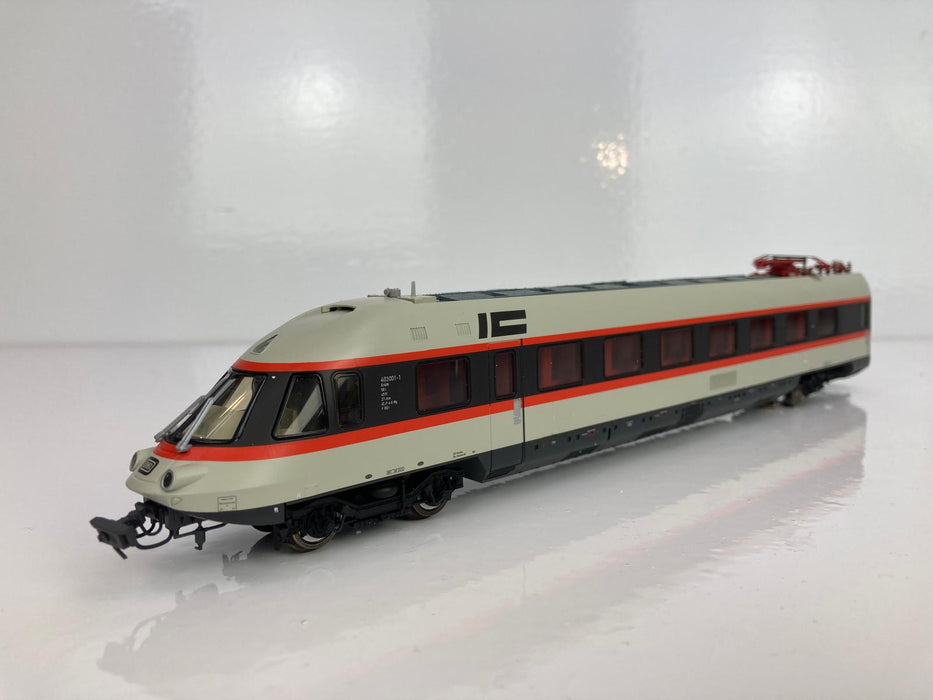
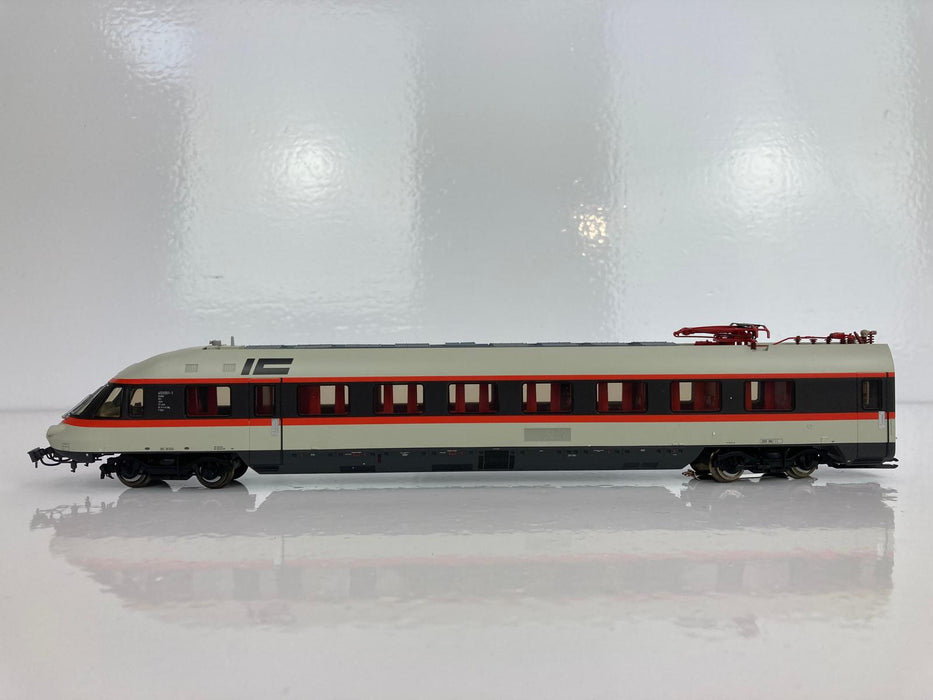
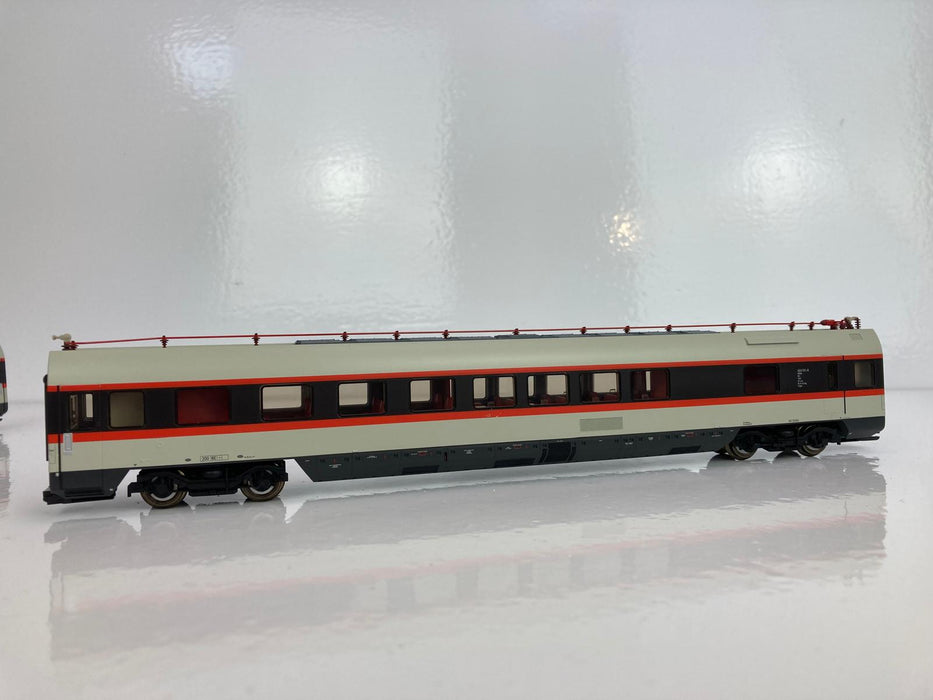
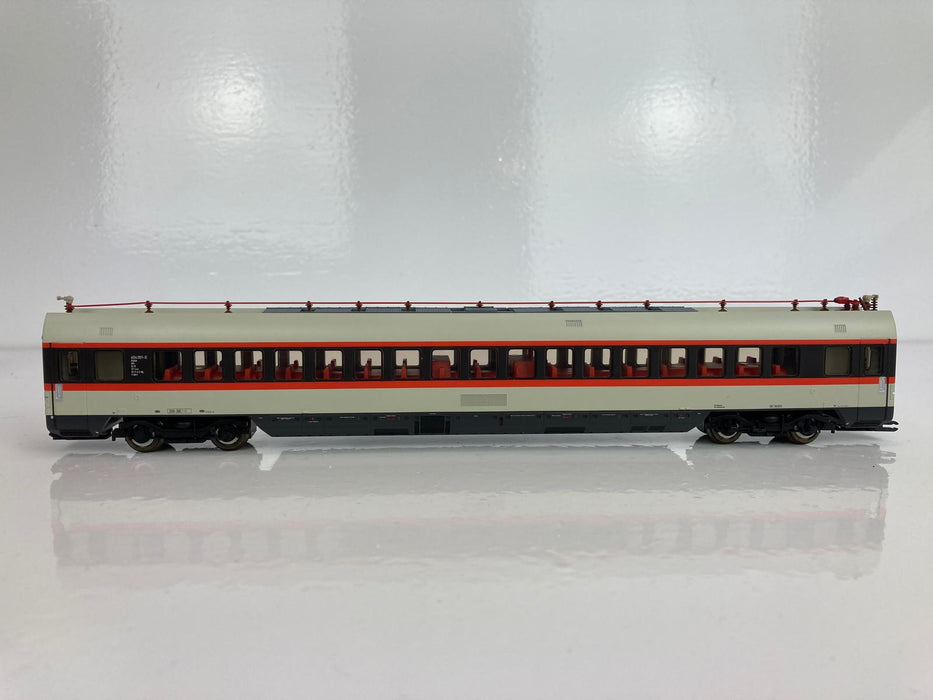
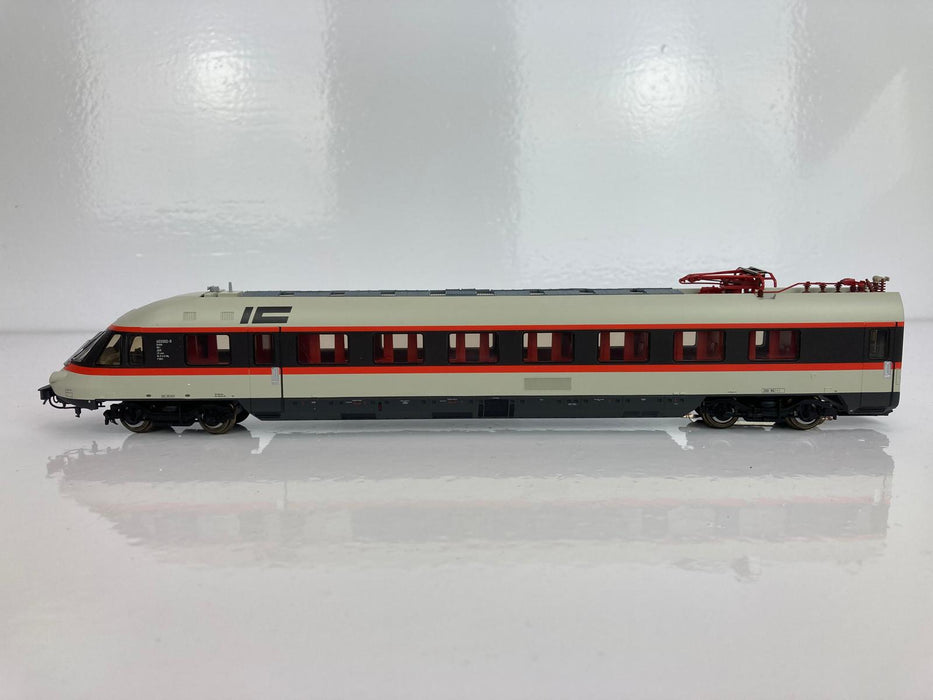
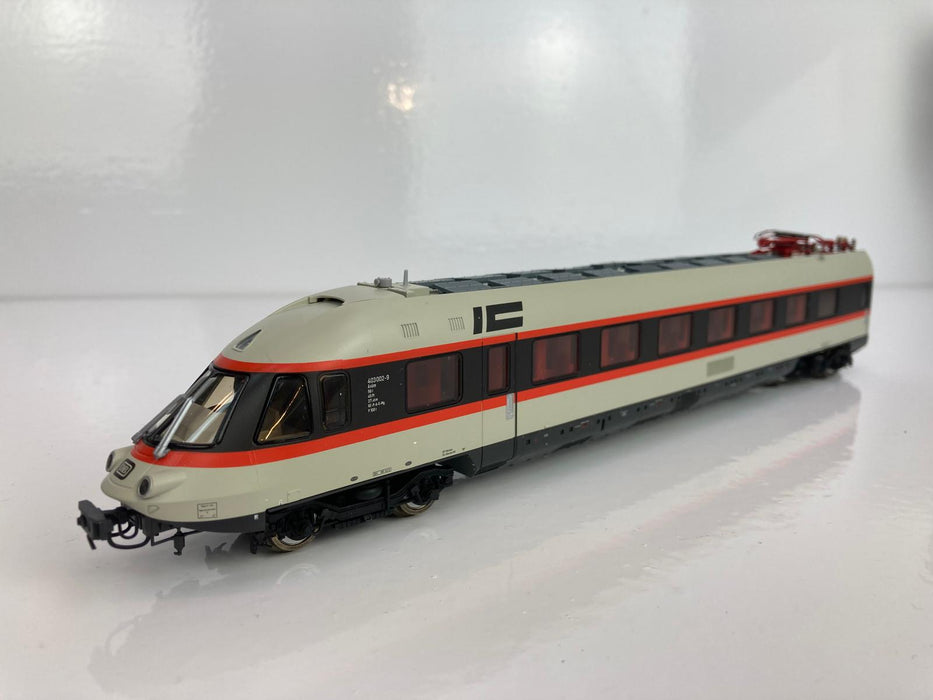
Märklin 37778 - Trainset BR 403 - DB - Avüm "Duck" - InterCity 1973 - MHI
Price includes VAT
Our service
- Factory Warranty
- Fast shipping or pick up in store
- Available for all your questions
Product description
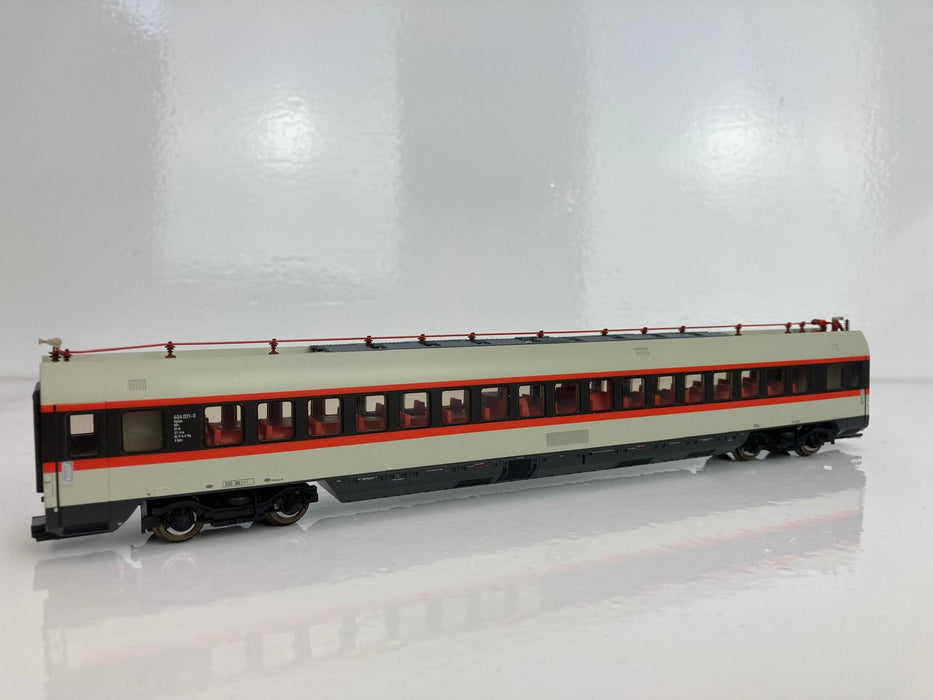
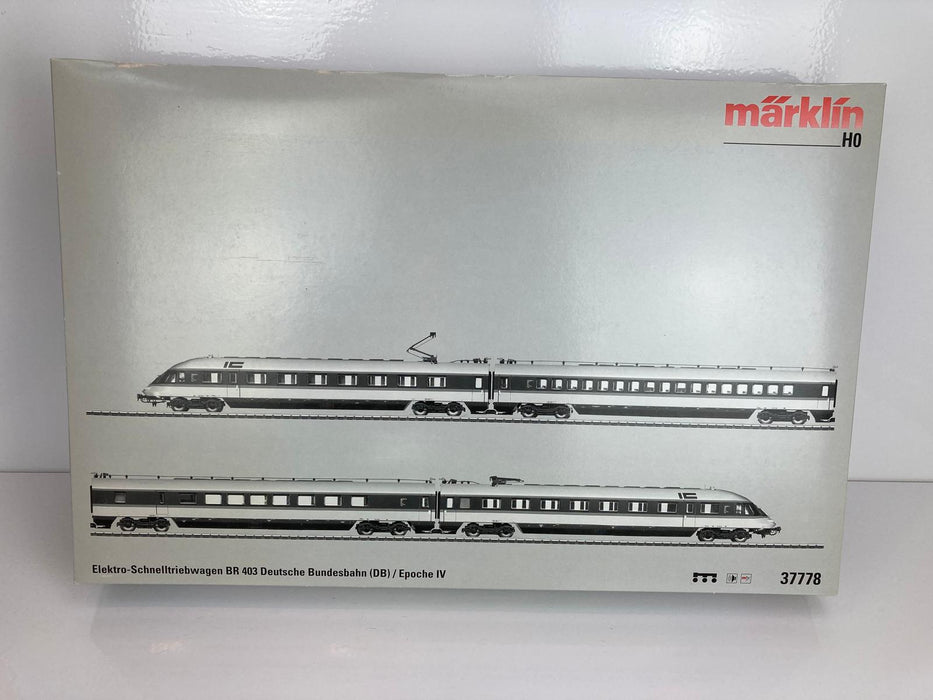
Märklin 37778 - Trainset BR 403 - DB - Avüm "Duck" - InterCity 1973 - MHI
Prototype : German Federal Railroad (DB) class 403 electric multiple unit, 1st class. 4-part unit. 1 end car, class 403 001-1, Avüm, with compartments. 1 intermediate car, class 404 101-8, ARüm, with a galley, dining area, and open compartment. 1 intermediate car, class 404 001-0, Apüm, with open compartments. 1 end car, class 403.002-9, Avüm, with compartments. InterCity livery: pebble gray/black-brown. Operating conditions: 1973.
A beautiful and complete train set for the enthusiast. Includes an MFX decoder and full sound.
Condition: Mint – Complete in original packaging.
- Completely new development.
- Heavy metal version.
- Many mounted details.
- 2 high-efficiency drives with flywheel in an intermediate car with an open compartment.
- mfx decoder with extensive light and sound functions.
- Standard built-in cabin lighting with LEDs.
- Standard built-in interior lighting and table lighting with warm white LEDs.
Model: 4-part unit. With an mfx digital decoder and extensive sound functions. Two controlled high-efficiency propulsion systems with flywheels in the open compartment intermediate car. Both axles in both bogies are each powered by a motor. Traction tires. Factory-installed interior lighting, cab lighting, and illuminated table lamps. Triple headlights change over with the direction of travel, dual red marker lights, interior lighting, and cab lighting operate in conventional operation and can be controlled digitally together. Illuminated table lamps can be controlled separately digitally, with random, alternating on and off switching. The lighting uses maintenance-free warm white and red LEDs. There is a multi-pole current-conducting special coupling with a guide mechanism between the cars. A pickup shoe changeover with a power supply dependent on the direction of travel is provided via the front end car. Numerous separately applied details. The roof equipment is detailed. Pantographs are mechanical only; they are not electrically functional. Both ends feature a replica of a non-functional Scharfenberg coupler. The minimum radius for operation is 360 mm.
Please note: All our models are carefully tested before being offered for sale.
For the enthusiast:
M With an eye on the future new lines of the Bundesbahn (Bundesbahn) in the late 1960s, an electric multiple unit was planned as an alternative to the locomotive-hauled express train. The 403 series multiple unit, which was to replace the diesel Trans Europe Express series 601, was allowed to afford the railways. State-of-the-art technology had to be combined with comfort. From 1974 onwards, three elegant, fast rail vehicles were put into service one after the other. The TEE's comfort status was, of course, untouchable: the 403 had only first-class seats in compartments and open compartments. Furthermore, the train was equipped with an air-conditioning system, revolving/sliding doors, a dining area, and a galley. The absolute highlights were a train secretary and a telephone booth. However, the train had to not only impress with its equipment but also be faster and quieter than the 601 series. The engineers faced the challenge of designing carriage bodies of very lightweight construction. Unlike conventional steel carriage construction, the chassis, body frame, and roof, side, and end walls were largely made of aluminum alloys. This was worth the effort: With an axle load of only 16 tons and thanks to the Allachs drive, the train accelerated from zero to 200 kilometers per hour in 100 seconds. The train generally traveled at 160 kilometers per hour and consisted of two power cars (series 403), an intermediate car with an open compartment (series 404.0), and an intermediate car with a dining area and galley (series 404.1). As an "all-around talent," the 403 was also suitable for service in Austria and Switzerland. A pantograph with a narrow contact strip, necessary for service in Switzerland, could be mounted on the roofs of the end power car. The braking system consisted of an electric resistance brake, compressed air disc brakes, and magnetic track brakes, as the ET 403 had to be able to stop from its maximum speed in less than 1,700 meters. The trains were used for three years in regular service, as well as in special Bundesbahn services. The main route was IC line 4 Munich – Nuremberg – Bremen. The prestigious DB trainsets were regularly presented at trade fairs and exhibitions. Between 1982 and 1993, the trainset enjoyed its second career in a special livery as the "Lufthansa Airport Express." The clever combination of modern technology and a futuristic design helped the intercity trains build their image. The 403 also shaped the third generation of current ICE trainsets.
Country
Duitsland
Shipping 📦
We strive to ship orders placed before 5:00 PM the same day. Orders placed after that time are usually shipped the next business day. We ship our packages with PostNL as standard and we offer multiple options. Pick-up is of course also possible in our store in Noordwijk. Please indicate this on the checkout page before payment and we will prepare your order as soon as possible.